
A Lifestyle Approach To Chronic Inflammation

A healthy lifestyle can help curb chronic inflammation and be a crucial part of managing chronic pain.
You can’t see it or feel it, but chronic low-grade inflammation may slowly be damaging your body. I don’t want you to treat “inflammation” as a four-letter word —it exists to help us. It’s a crucial part of the body’s natural healing system. But it doesn’t just happen in response to injury. An inflammatory response also occurs when the immune system goes into action when there’s an infection.
Unfortunately, the inflammatory response can also activate when there isn’t an injury or illness. It’s this chronic inflammation that can wreak havoc on our health.
Fortunately, there’s a lot of evidence that a healthy lifestyle can help curb chronic inflammation and be a crucial part of managing chronic pain & diseases. In fact, according to the National Institute of Health:
“People with insulin resistance and prediabetes can decrease their risk for diabetes by eating a healthy diet and reaching and maintaining a healthy weight, increasing physical activity, not smoking, and taking medication.”
“The main treatment for atherosclerosis is lifestyle changes.”
Lifestyle Change #1
Anti-inflammatory Nourishment
At the most basic level, the best way to eat curb inflammation with your plate is to eat fewer inflammatory foods and more anti-inflammatory foods. Base your diet on whole, nutrient-dense foods that contain antioxidants — and avoid processed products.
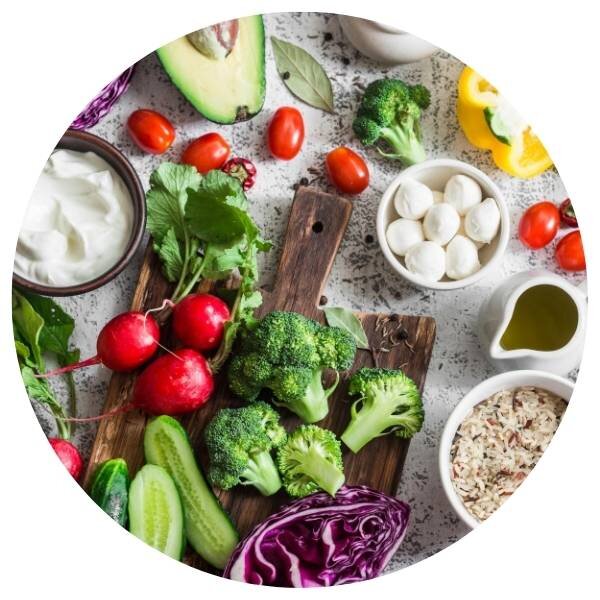
Anti-Inflammatory: Mediterranean Diet
One diet has a lot of science supporting its health-promoting, emotional well-being improving, and life-extending properties. This foodie-focused lifestyle change is known as the Mediterranean diet.
The Mediterranean diet includes a lot of vegetables, fruits, and legumes; some fish, whole grains, tree nuts, and dairy; and small amounts of olive oil, tea, cocoa, red wine, herbs, and spices. It also has low levels of red meat and salt, and a low glycemic index (it doesn’t raise blood sugar very high).
The Mediterranean diet can lower the risk of diabetes and adverse effects of obesity, even without weight loss. Some theorize that it’s anti-inflammatory properties of the foods consumed that make the most significant impact.
Many of the ingredients in Mediterranean cooking contain substances that are both anti-inflammatory and antioxidant. Some of the most common anti-inflammatory elements are polyphenols, flavonoids, pigments, unsaturated fats (including omega-3s), and anti-inflammatory vitamins and minerals like vitamin E and selenium.
Even when we look at individual components in food, we should keep in mind that it’s the whole diet, with all foods and lifestyle components that help to promote health. One or two individual aspects don’t have the same effect as a holistic approach to improving overall nutrition and lifestyle.

Anti-Inflammatory: Dietary Fiber
People who eat more fiber tend to have lower risks of diabetes and heart disease. There are a few reasons why increasing fiber intake may work, and one is from reduced inflammation. People who eat more fiber, fruits, and vegetables tend to have lower levels of CRP.
Animal studies show that eating fiber reduces the levels of inflammatory markers and also reduces excess body fat.
This effect can be because fiber slows down the absorption of food from the body, reducing blood sugar spikes. It can also be because of its interaction with the friendly microbes in our gut.
Foods that are high in fiber include whole grains, legumes (i.e., beans and lentils), cocoa, seeds (e.g., sesame), tree nuts (e.g., almonds), avocados, raspberries, and squash.
You can upgrade your dietary fiber by eating plenty of whole foods that are naturally rich in fiber.

Anti-Inflammatory: Dietary Fat
Meals with unsaturated fats seem to reduce the inflammatory response after the meal.
Unsaturated fats like omega-3’s from fish seem to be particularly healthful. People who eat more fish tend to have lower levels of atherosclerosis and heart disease. Why? Fish-based omega-3 unsaturated fats reduce the source of inflammation and increase the number of anti-inflammatory molecules.
Tree nuts are another excellent source of unsaturated fats and anti-inflammatory polyphenols. While nuts do contain a fair amount of fat, many studies show that people who regularly eat nuts do not tend to have a higher BMI (body mass index) or more body fat. Even adding nuts to the diet doesn’t seem to promote weight gain compared to the number of calories they contain. Many studies also show no weight gain after adding nuts to the menu.
Why don’t fat-containing nuts promote weight gain? Several studies show an increase in the resting metabolic rate in people who eat nuts - they seem to burn more calories even when they’re not active. This may be because of the type of fat (unsaturated), protein, fiber, and/or the polyphenol content in the nuts.
You can upgrade your dietary fats by eating more fish and nuts. Fish and nuts contain unsaturated fats that have anti-inflammatory effects. They can also enhance insulin sensitivity and even improve the health of insulin-producing cells.
When it comes to fish oil supplements, many studies show a reduction in risk factors for heart disease by improving the way our bodies metabolize fats and its ability to “thin” the blood. However, fish oil supplements have mixed reviews when it comes to reducing inflammation. They can be helpful for some, but I recommend eating the fish itself.
“Research shows that diet should be an integral part of a pain management program — especially as patients age”
Inflammation:
Sugar & Starch

Processed Foods
:Inflammation
Excess sugars and starches put stress on our blood sugar levels and increase our risk of chronic diseases. They also promote inflammation in the body.
Animals who eat sweets and white bread, and drink a lot of sugar-sweetened beverages have higher levels of inflammatory markers like CRP. Studies in people also show that diets low in sugar and starch have lower than average levels of CRP.
One possible reason is that more sugar and starch may increase the production of inflammatory molecules and free radicals by giving immune cells more fuel and increase their activity.
You can upgrade your nutrition in this area by eating fewer sugars (especially “added” sugars) and starches (especially “refined” carbohydrates).
As you might have guessed, processed foods are common inflammation activators. You’ve probably felt yourself. The bloating that comes along with a highly processed and salty meal. The sugar-crash after a donut. We all know that too many process foods can impact the way that we feel. But if you’re trying to curb your inflammation, then swapping processed foods for whole foods is a must.
Processed meats: hot dogs and packaged lunch meat are packed with advanced glycation end products (AGEs). AGEs are formed by cooking meats and some other foods at high temperatures. They are shown to promote inflammation. If you have chronic pain or are concerned about chronic inflammation then be mindful of your processed meat consumption.
Artificial trans fats: Artificial trans fats are likely the unhealthiest fats you can eat. They're created by adding hydrogen to unsaturated fats, which are liquid, to give them the stability of a more solid fat. Their so bad, that in 2018 the World Health Organization called to have all artificial trans fats removed from the global food supply. Remember, trans fats are also naturally occurring. However, it’s the artificial trans fats have been shown to cause inflammation and increase disease risk
Refined carbohydrates: candy, bread, pasta, pastries, some cereals, cookies, cakes, sugary soft drinks, and all processed foods that contain added sugar or flour. Some research suggest that the abundance of refined carbs in the modern diet may encourage the growth of inflammatory gut bacteria that can increase your risk of obesity and inflammatory bowel disease.
Lifestyle Change #2
Moderate Exercise

Just 20 minutes of moderate exercise (like fast walking) can stimulate the immune system in a way that creates a chain reaction of anti-inflammatory effects. Regular moderate exercise tends to lower markers of systemic inflammation. One study showed that just 20 minutes of moderate exercise a day decreased inflammation markers by 12%. So remember, your workout session doesn't have to be intense to have anti-inflammatory effects.
The 5-Point Rating Scale of Perceived Exertion "Talk Test" by Bergland
Very Easy: You could sing a song (40 to 50 percent maximum heart rate).
Easy: You could carry on a regular conversation (50 to 60 percent).
Moderate: You could speak four- to six-word sentences (60 to 80 percent).
Hard: You could express short two- or three-word thoughts (80 to 85 percent)
Very Hard: You could grunt and use sign language (85 to 100 percent)
Like a little more oomph in your movement? People who exercise at a higher intensity tend to have even lower levels of CRP. So if your system can tolerate more intensive training, then weaving it into your lifestyle could help you to lower your CRP markers. However, if your bucket is already full, then intense training may not be for you.
Lifestyle Change #3
Better Sleep

Both acute and chronic sleep deprivation can cause an increase in inflammatory markers in the blood.
Sleep, immune function, and inflammation share a common regulator. Our sleep is regulated by circadian rhythms, which drive hormones and other physiological changes that cause us to move back and forth along a continuum of sleep and wakefulness throughout the 24-hour day. When circadian rhythms are out of sync, so is rest.
That said, the circadian rhythms regulate more than just our sleep patterns. They also impact our immune system, and with it, our levels of inflammation. When circadian rhythms are disrupted, so is normal immune function.
Too little & too much sleep triggers inflammation.
There is a robust body of research showing that lack of sleep raises levels of inflammation in the body. Laboratory studies have found that an acute and prolonged — 24 hours or more — sleep loss increases inflammation activity in the body. The chronic and insufficient sleep that so many people experience in their daily lives can also elevate inflammation.
But lack of sleep isn’t the only contributing sleepy factor in inflammation. It might surprise you to learn that sleeping too much can also trigger unhealthful inflammation. A 2016 study reviewed more than 70 scientific investigations into the relationship between inflammation and sleep. It found that in addition to short sleep’s adverse effects on the immune system’s inflammatory response, sleeping excessively also raised levels of key inflammatory markers, including C-reactive protein.
I encourage you to upgrade your sleep. For most adults, that’s between 7-9 hours a night. Consistently getting the right amount of sleep might help you to avoid low-grade, systemic inflammation that’s associated with aging and chronic disease.
Quick Conclusion
Inflammation can be healthy if it is fighting an infection or healing a wound, but chronic inflammation is associated with many serious conditions.
There are a lot of nutrition and lifestyle issues that can contribute to chronic diseases & persistent pain. There are several ways they can do this; inflammation is just one of them.
The good news is that there are several nutrition and lifestyle factors you can utilize to reduce inflammation. These include eating fewer sugars and starches, eating more fish, nuts and dietary fiber, and getting regular exercise and quality sleep.
NOTE: None of these are a substitute for professional medical advice. If you have any of these conditions, make sure you’re being monitored regularly by a licensed healthcare professional.

RELATED POSTS



-
Alkhatib, A., Tsang, C., Tiss, A., Bahorun, T., Arefanian, H., Barake, R., Khadir, A. & Tuomilehto, J. (2017). Functional Foods and Lifestyle Approaches for Diabetes Prevention and Management. Nutrients. 9(12). pii: E1310. doi: 10.3390/nu9121310. LINK: https://www.ncbi.nlm.nih.gov/pmc/articles/PMC5748760/
Appleton, C., et al. Editorial. “Weighing in” on the Framingham osteoarthritis study: measuring biomechanical and metabolic contributions to osteoarthritis. Arthritis Rheumatol. 2017;69:1127-30. LINK: http://www.ncbi.nlm.nih.gov/entrez/query.fcgi?cmd=Retrieve&db=PubMed&dopt=Abstract&list_uids=28267901
Bäck, M. (2017). Omega-3 fatty acids in atherosclerosis and coronary artery disease. Future Science OA, 3(4), FSO236. http://doi.org/10.4155/fsoa-2017-0067 LINK: https://www.ncbi.nlm.nih.gov/pmc/articles/PMC5674268/
Bäck, M. & Hansson, G.K. (2015). Anti-inflammatory therapies for atherosclerosis. Nat Rev Cardiol. 12(4):199-211. doi: 10.1038/nrcardio.2015.5. Epub 2015 Feb 10. LINK: https://www.ncbi.nlm.nih.gov/pubmed/25666404
Burke, M.F., Burke, F.M. & Soffer, D.E. (2017). Review of Cardiometabolic Effects of Prescription Omega-3 Fatty Acids. Curr Atheroscler Rep. 19(12):60. doi: 10.1007/s11883-017-0700-z. LINK: https://link.springer.com/article/10.1007%2Fs11883-017-0700-z
Byers MR, Bonica JJ. Peripheral pain mechanisms and nociceptor plasticity. In: Loeser JD (ed). Bonica’s Management of Pain. 3rd ed. Philadelphia, PA: Lippincott Williams & Wilkins; 2001:26-72.
Calder, P.C. (2015). Marine omega-3 fatty acids and inflammatory processes: Effects, mechanisms and clinical relevance. Biochim Biophys Acta. 1851(4):469-84. doi: 10.1016/j.bbalip.2014.08.010. LINK: http://www.sciencedirect.com/science/article/pii/S1388198114001656?via%3Dihub
Comas, M., Gordon, C. et. al. A circadian based inflammatory response – implications for respiratory disease and treatment Sleep Science and Practice2017 1:18 https://doi.org/10.1186/s41606-017-0019-2
Davison, K,M. & Temple, N.J. (2018). Cereal fiber, fruit fiber, and type 2 diabetes: Explaining the paradox. J Diabetes Complications. 32(2):240-245. doi: 10.1016/j.jdiacomp.2017.11.002.LINK: http://www.jdcjournal.com/article/S1056-8727(17)30812-7/fulltext
Ding, C., Association between leptin, body composition, sex and knee cartilage morphology in older adults: the Tasmanian older adult cohort (TASOAC) study. Ann Rheum Dis. 2008;67:1256-61. LINK: https://www.ncbi.nlm.nih.gov/pubmed/18174218
Drew, W., Wilson, D.V. & Sapey, E. (2017). Inflammation and neutrophil immunosenescence in health and disease: Targeted treatments to improve clinical outcomes in the elderly. Exp Gerontol. pii: S0531-5565(17)30841-0. doi: 10.1016/j.exger.2017.12.020. LINK: https://www.ncbi.nlm.nih.gov/pubmed/29288715
Ellinger, S., & Stehle, P. (2016). Impact of Cocoa Consumption on Inflammation Processes—A Critical Review of Randomized Controlled Trials. Nutrients, 8(6), 321. http://doi.org/10.3390/nu8060321 LINK: https://www.ncbi.nlm.nih.gov/pmc/articles/PMC4924162/
Engin, A.B., Tsatsakis, A.M., Tsoukalas, D. & Engin, A. (2017). Do flavanols-rich natural products relieve obesity-related insulin resistance? Food Chem Toxicol. pii: S0278-6915(17)30803-7. doi: 10.1016/j.fct.2017.12.055. LINK: https://www.ncbi.nlm.nih.gov/pubmed/29288757
Examine.com. Fish Oil Supplements. Accessed January 12, 2018. LINK: https://examine.com/supplements/fish-oil/
Frasca, D., Blomberg, B.B. & Paganelli, R. (2017). Aging, Obesity, and Inflammatory Age-Related Diseases. Front Immunol. 8:1745. doi: 10.3389/fimmu.2017.01745. eCollection 2017. LINK: https://www.frontiersin.org/articles/10.3389/fimmu.2017.01745/full
Gutiérrez-Grijalva, E.P., Picos-Salas, M.A., Leyva-López, N., Criollo-Mendoza, M.S., Vazquez-Olivo, G. & Heredia, J.B. (2017). Flavonoids and Phenolic Acids from Oregano: Occurrence, Biological Activity and Health Benefits. Plants (Basel). 7(1). pii: E2. doi: 10.3390/plants7010002. LINK: https://www.ncbi.nlm.nih.gov/pubmed/29278371
Haghighatdoost, F. & Nobakht, M.Gh.B.F. (2017). Effect of conjugated linoleic acid on blood inflammatory markers: a systematic review and meta-analysis on randomized controlled trials. Eur J Clin Nutr. doi: 10.1038/s41430-017-0048-z. LINK: https://www.ncbi.nlm.nih.gov/pubmed/29288248
Iop, L., Dal Sasso, E., Schirone, L., Forte, M., Peruzzi, M., Cavarretta, E., … Frati, G. (2017). The Light and Shadow of Senescence and Inflammation in Cardiovascular Pathology and Regenerative Medicine. Mediators of Inflammation, 2017, 7953486. http://doi.org/10.1155/2017/7953486 LINK: https://www.ncbi.nlm.nih.gov/pmc/articles/PMC5651105/
Irwin, Michael R. et al. Sleep Disturbance, Sleep Duration, and Inflammation: A Systematic Review and Meta-Analysis of Cohort Studies and Experimental Sleep Deprivation.Biological Psychiatry, Volume 80, Issue 1, 40 - 52 LINK: https://www.biologicalpsychiatryjournal.com/article/S0006-3223(15)00437-0/abstract
Kim, Y., Keogh, J. B., & Clifton, P. M. (2017). Benefits of Nut Consumption on Insulin Resistance and Cardiovascular Risk Factors: Multiple Potential Mechanisms of Actions. Nutrients, 9(11), 1271. http://doi.org/10.3390/nu9111271 LINK: https://www.ncbi.nlm.nih.gov/pmc/articles/PMC5707743/
Kolb, H. & Mandrup-Poulsen, T. (2010) The global diabetes epidemic as a consequence of lifestyle-induced low-grade inflammation. Diabetologia, 53:10. https://doi.org/10.1007/s00125-009-1573-7 LINK: https://link.springer.com/article/10.1007%2Fs00125-009-1573-7
Lasselin, J. (2016). Low-Grade Inflammation and The Brain. www.bodyinmind.org. LINK: https://bodyinmind.org/low-grade-inflammation-brain/
Libby, P. (2006). Inflammation and cardiovascular disease mechanisms. Am J Clin Nutr. 83(2):456S-460S. LINK: http://ajcn.nutrition.org/content/83/2/456S.long
Lontchi-Yimagou E1, Sobngwi E, Matsha TE, Kengne AP. (2013). Diabetes mellitus and inflammation. Curr Diab Rep. 13(3):435-44. doi: 10.1007/s11892-013-0375-y. lINK: https://link.springer.com/article/10.1007%2Fs11892-013-0375-y
Mäntyselkä P, Miettola J, Niskanen L, Kumpusalo E. Glucose regulation and chronic pain at multiple sites. Rheumatology (Oxford). 2008;47(8):1235-1238.
Mäntyselkä P, Miettola J, Niskanen L, Kumpusalo E. Chronic pain, impaired glucose tolerance and diabetes: a community-based study. Pain. 2008;137(1):34-40.
Mäntyselkä P, Miettola J, Niskanen L, Kumpusalo E. Persistent pain at multiple sites—connection to glucose derangement. Diabetes Res Clin Pract. 2009;84(2):e30-e32
Mense S, Simmons DG. Muscle Pain: Understanding Its Nature, Diagnosis, and Treatment.Philadelphia, PA: Lippincott, Williams & Wilkins; 2001:26-30
Mullington, J. M., Simpson, N. S., Meier-Ewert, H. K., & Haack, M. (2010). Sleep loss and inflammation. Best practice & research. Clinical endocrinology & metabolism, 24(5), 775–784. doi:10.1016/j.beem.2010.08.014
National Institutes of Health. National Heart, Blood, and Lung Institute. Atherosclerosis. Accessed January 10, 2018. LINK: https://www.nhlbi.nih.gov/health-topics/atherosclerosis
National Institutes of Health. National Institute of Diabetes and Digestive and Kidney Diseases. Diabetes. Accessed January 10, 2018. LINK: https://www.niddk.nih.gov/health-information/diabetes
National Institutes of Health. National Institute of Diabetes and Digestive and Kidney Diseases. Prediabetes & Insulin Resistance. Accessed January 10, 2018. LINK: https://www.niddk.nih.gov/health-information/diabetes/overview/what-is-diabetes/prediabetes-insulin-resistance
Osei, K., & Gaillard, T. (2017). Disparities in Cardiovascular Disease and Type 2 Diabetes Risk Factors in Blacks and Whites: Dissecting Racial Paradox of Metabolic Syndrome. Frontiers in Endocrinology, 8, 204. http://doi.org/10.3389/fendo.2017.00204 LINK: https://www.ncbi.nlm.nih.gov/pmc/articles/PMC5583515/
Palomer, X., Pizarro-Delgado, J., Barroso, E. & Vázquez-Carrera, M. (2017). Palmitic and Oleic Acid: The Yin and Yang of Fatty Acids in Type 2 Diabetes Mellitus. Trends Endocrinol Metab. pii: S1043-2760(17)30170-4. doi: 10.1016/j.tem.2017.11.009. LINK: https://www.ncbi.nlm.nih.gov/pubmed/29290500
Poreba, M., Mostowik, M., Siniarski, A., Golebiowska-Wiatrak, R., Malinowski, K. P., Haberka, M., … Gajos, G. (2017). Treatment with high-dose n-3 PUFAs has no effect on platelet function, coagulation, metabolic status or inflammation in patients with atherosclerosis and type 2 diabetes. Cardiovascular Diabetology, 16, 50. http://doi.org/10.1186/s12933-017-0523-9 LINK: https://www.ncbi.nlm.nih.gov/pmc/articles/PMC5391604/
Rang HP, Bevan S, Dray A. Chemical activation of nociceptive peripheral neurones. Br Med Bull. 1991;47(3):534-548.
Robson, R., Kundur, A.R. & Singh, I. (2017). Oxidative stress biomarkers in type 2 diabetes mellitus for assessment of cardiovascular disease risk. Diabetes Metab Syndr. 2017 Dec 30. pii: S1871-4021(17)30465-4. doi: 10.1016/j.dsx.2017.12.029. LINK: https://www.ncbi.nlm.nih.gov/pubmed/29307576
Ruparelia, N., Chai, J. T., Fisher, E. A., & Choudhury, R. P. (2017). Inflammatory processes in cardiovascular disease: a route to targeted therapies. Nature Reviews. Cardiology, 14(3), 133–144. http://doi.org/10.1038/nrcardio.2016.185 LINK: https://www.ncbi.nlm.nih.gov/pmc/articles/PMC5525550/
Stoyan Dimitrov, Elaine Hulteng, Suzi Hong. Inflammation and exercise: Inhibition of monocytic intracellular TNF production by acute exercise via β2-adrenergic activation. Brain, Behavior, and Immunity, 2016; DOI: 10.1016/j.bbi.2016.12.017
Suen, J., Thomas, J., Kranz, A., Vun, S., & Miller, M. (2016). Effect of Flavonoids on Oxidative Stress and Inflammation in Adults at Risk of Cardiovascular Disease: A Systematic Review. Healthcare, 4(3), 69. http://doi.org/10.3390/healthcare4030069 LINK: https://www.ncbi.nlm.nih.gov/pmc/articles/PMC5041070/
US Department of Agriculture Nutrient Database. Dietary Fiber. Accessed January 9, 2018. LINK: https://ndb.nal.usda.gov/ndb/nutrients/report/nutrientsfrm?max=25&offset=0&totCount=0&nutrient1=291&nutrient2=&nutrient3=&subset=0&sort=c&measureby=m
Walsh et al. The association between body fat and musculoskeletal pain: a systematic review and meta-analysis. BMC Musculoskeletal Disorders, (2018) 19:233. LINK: https://bmcmusculoskeletdisord.biomedcentral.com/articles/10.1186/s12891-018-2137-0
Weisberg, S.P., McCann, D., Desai, M., Rosenbaum, M., Leibel, R.L., Ferrante, A.W. Jr. (2003) Obesity is associated with macrophage accumulation in adipose tissue. J Clin Invest 112:1796–1808 LINK: https://www.ncbi.nlm.nih.gov/pmc/articles/PMC296995/
Wikipedia. Inflammation (definition). Accessed Jan 9, 2018. LINK: https://en.wikipedia.org/wiki/Inflammation
Xu, H., Barnes, G.T., Yang, Q., et al. (2003) Chronic inflammation in fat plays a crucial role in the development of obesity-related insulin resistance. J Clin Invest 112:1821–1830 LINK: https://www.ncbi.nlm.nih.gov/pmc/articles/PMC296998/
Yoshida, K., Hashimoto, T., et al. Involvement of the Circadian Rhythm and Inflammatory Cytokines in the Pathogenesis of Rheumatoid Arthritis. Journal of Immunology Research Volume 2014, Article ID 282495, http://dx.doi.org/10.1155/2014/282495
Younger, J., Association of Leptin with body pain in women. J Women’s Health. 2016;25:752-60. LINK: https://www.ncbi.nlm.nih.gov/pubmed/27028709
Zhang, P., Significance of increased leptin expression in osteoarthritis patients. PLoS One, 2015;21:536-541. LINK: https://www.ncbi.nlm.nih.gov/pmc/articles/PMC4403877/
Zhao, Y., Forst, C. V., Sayegh, C. E., Wang, I.-M., Yang, X., & Zhang, B. (2016). Molecular and Genetic Inflammation Networks in Major Human Diseases. Molecular bioSystems, 12(8), 2318–2341. http://doi.org/10.1039/c6mb00240d LINK: https://www.ncbi.nlm.nih.gov/pmc/articles/PMC4955784/

Sleep is an active process. Your body might be still, but your biology is bustling with activity. All of that internal nocturnal activity is crucial for living well.
Sleep also plays a massive role in detoxification. Your body has been using sleep to recharge and repair itself since before you were born. It’s no surprise that many sleep disorders are now linked to chronic pain, decreased cognitive function, depression, chronic pain, and neurological diseases, like Alzheimer’s.