

Begin to train your mind to be able to move from detailed attention to a broader and more spacious awareness.
Finally, a good excuse to lie down and do nothing! Ok. Maybe not quite nothing.
Exploring the art of Body Scans is a wonderful way of developing skills such as embodied awareness (i.e., being able to sense yourself), concentration, and focused attention. Plus, body scanning is an effective 'pre-movement' strategy or end of the day stress-reduction practice.
Whoa!
Did you say stress-reduction? So is this a relaxation technique?
Not exactly. The Body Scan is a form of meditation or mindfulness practice. It is also often used at the beginning, and throughout, a Feldenkrais Awareness Through Movement lesson. However, one of the big-ol-perks of this practice is that all that sensing in the horizontal tends to help relax our busy minds and soothe our stressed-out soles (yes as in the soles of ye feet).
But the important thing to remember is that it is a practice. For effective practice, we must add variation. So today's scan is one of many ways to attend to yourself.
In this way, you begin to train your mind to be able to move from detailed attention to a broader and more spacious awareness from one moment to the next.
So give this Body Scan goodness a go and see what you discover. All you have to do is listen to this audio, or make up your own, and do it just as you get ready for bed. It's that simple.
RELATED POSTS
Have you ever walked into a room and immediately felt the energy shift? Or sat next to someone in meditation and found your practice suddenly deeper, more anchored?
There’s an invisible thread connecting all of us - a field of intelligence that allows healing to ripple from one nervous system to another. In today’s episode, I’m sharing stories from Feldenkrais classrooms, meditation halls, and healing tables that reveal how we actually heal each other simply through our presence.
This isn’t just beautiful theory - it’s neuroscience, and it changes everything about how we approach community, collaboration, and our own healing journey.

What if everything you’ve been taught about the separation between mind and body is wrong? What if your body isn’t just carrying out your mind’s commands, but is actually an integral part of your intelligence, memory, and decision-making?
In today’s episode, I’m sharing the moment that completely shifted my understanding of embodied intelligence - and why this realization changes everything about how we approach healing, learning, and living authentically.

Have you ever wondered why you hold your breath when doing something new?
We often take our breath for granted, usually breathing in and out 12-16 times every minute without being aware of it. Most of us only notice our breath when something happens to prevent us from breathing normally. Others intentionally bring their attention to the breath as part of mindfulness practice.
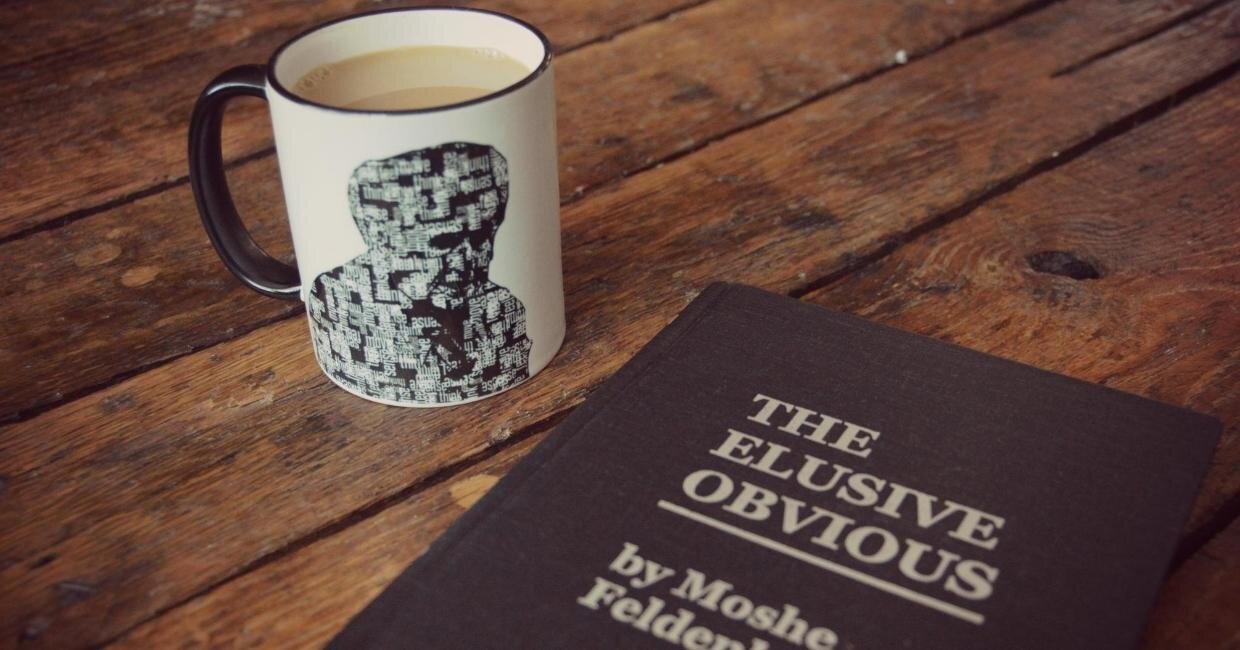
The book, "The Elusive Obvious," was once only available in Hardback format — which brings me a special kind of sensorial gratification.
As I flip through the dense and fibrous pages, I digest each word of somatic wonder. My mind starts to bend towards a deeper realization that this work, The Feldenkrais Method®, is so much more than movement. What we discover about ourselves can change everything!

Recently, a person asked:
"I'm interested in the Feldenkrais concept to "go slow without hurrying." Whether it's while eating, walking, etc. Can you explain more about it and how to cultivate that practice?"
My response was relatively short, so I'll expand upon it here. And, I ask that you join me in sharing your experience with fast, slow & hurrying in the comments below. Together, we can start to paint a more comprehensive picture of how to cultivate change.
A few weeks ago, I went on a relatively short and easy hike in the woods, a trail I had been on before. It led to a beautiful watering hole where a stream became a waterfall, ultimately flowing into a large pool for swimming before continuing onward. The trail was quite wide and did not have many obstructions to deal with; it was also relatively flat.
Along I plodded, anxious to reach the water to cool off as it was an exceptionally hot and muggy day. Halfway there and my feet and back were already tiring. By the time I reached all the action, which was only a mile in, my feet had moved past tiring to aching.

The movements of Feldenkrais® can serve as a conduit to a deeper connection to yourself and is one of the ways in which it’s similar to yoga. The difference, however, is how we go about those movements. But those differences can vary from person-to-person and from teacher-to-teacher (lineage or style).

For better or worse, cold weather has finally arrived in the Northeast. I actually prefer the cool, crisp air of Winter over the hot and muggy days of Summer.
Still, I am not a huge fan of outdoor walks this time of year. So I was faced with the perennial question, “What can I do to keep moving this winter?” My favorite answer: Swimming! Indoors, that is. Probably not surprisingly, I shiver at the thought of joining one of these ‘polar bear’ clubs where some folks run into icy cold lakes in their skivvies!

Have you ever had a moment of subtle resistance? Well, of course, we all have. Here is a little trick I learned while exploring Awareness Through Movement and again while sitting on my cushion. To be frank, it has helped me in just about everything I do.
Recently I noticed I was reluctant to start dinner. Strange. I love to cook. I love to eat. I have a big beautiful box of fresh veggies from my local CSA. So, why on earth was I resisting this?
Discover how your midlife body might be working magic you can’t see. This personal story from Feldenkrais training reveals why trusting your body’s natural learning process - even when your mind doubts it - can lead to breakthrough moments. Learn about the “fertile darkness” and how your nervous system continues learning and integrating new patterns long after formal lessons end. Perfect for midlife women learning to trust their bodies again and embrace the wisdom that comes with age.