How Shared Presence Can Support Our Capacity To Heal
I believe we heal in relationship because that’s where the wounds happened in the first place. Most of our little wounds, the soft scabs and subtle hardenings we developed to protect ourselves from being hurt, formed in connection with others. In moments when we felt unseen, unheard, or unsafe with the people who mattered most to us.
Over time these silent wounds shaped how we related to others. They set the limit on how much of ourselves we’re willing to reveal. And they even inform how safe we feel simply being who we are. While we may learn to navigate the world around those old wounds, the longing for connection doesn’t go away.
So it makes sense that real healing also happens in relationship.
But I’m not just talking about the obvious ways we heal together, through therapy, through honest conversations, through the support of people who love us. I’m talking about something more mysterious, more profound.
I’m talking about the invisible thread that connects all of us, and what happens when we create spaces where that thread can be felt, honored, and activated.
The Collective Transformation In Somatic Movement
In the more than twenty years I’ve been teaching Feldenkrais-inspired classes and workshops, I’ve had the incredible privilege of witnessing this phenomenon over and over again, both in-person and online.
Imagine this:
Twenty or thirty people lying on mats, eyes closed, moving slowly through the same gentle lesson.
Everyone is absorbed in their own internal experience, their own discoveries about how they organize their movement, their breathing, their attention.
The room is quiet except for my voice guiding you through subtle explorations.
“Notice what happens when you let your ribs soften…”
“Feel how this small movement in your pelvis travels up your spine…”
And then it happens.
Someone, maybe on the other side of the room, maybe right next to you, makes a discovery. They find a new way of moving that feels more integrated, more free. They don’t even open their eyes.
And somehow, the quality of the whole room seems to shift. It moves through the entire class like a wave.
People who were struggling with a particular movement find it flowing easily. Bodies that were holding tension start to soften. The quality of attention in the entire room shifts.
It’s this tangible sense that when one person touches something deeper, when they access a more integrated way of being. Something about that experience becomes available to the whole group.
There’s this thread of intelligence that connects all of us. When one person touches that thread, we all feel it. We all receive the benefit of their discovery.
The Collective Transformation In Meditation
I’ve felt this same phenomenon in meditation.
You’re sitting on your cushion, working with your restless mind, trying to find some steadiness in your practice. And then someone sits down next to you who’s had years of practice, someone who carries a quality of presence that’s been cultivated through thousands of hours of sitting.
You feel it in your bones.
Suddenly, your practice anchors differently. Your attention settles in a way it couldn’t moments before. Their depth creates permission for your depth. Their commitment to presence supports your own capacity to be present.
It’s not that they’re doing anything to you. They’re not trying to influence your experience. And yet their presence seems to make something possible in you.
This is what the meditation traditions mean when they talk about sangha, not just community, but the living field of practice that emerges when sincere practitioners come together.
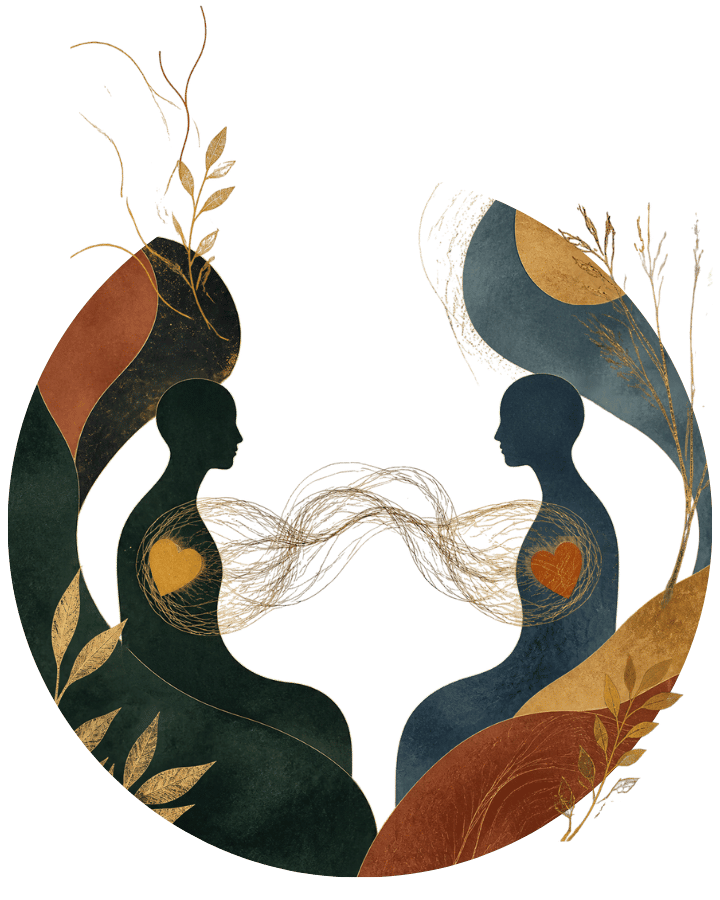
In a group setting …people entrain with each other's healing rhythms.
—Dr. Donald Epstein
The Spinal Work That Changed Everything
One of my most profound experiences of this invisible thread happened when I was working as a chiropractic assistant in college.
The chiropractor I worked for practiced Network Spinal Analysis, a gentle approach that uses an incredibly light touch to help the nervous system unwind patterns of tension in the body.
Part of my job perks included receiving treatments while I was working.
I’d lie on one of the treatment tables with four or five other patients receiving treatment around me. The subtle touches would help me unfurl, creating waves of movement through my spine and pelvis.
Then one day, someone came in and lay down on the table next to me, and everything shifted.
My subtle waves became big, profound movements. My spine and my pelvis started moving in ways I’d never experienced. It was so potent, so dramatically different from what had been happening moments before, that I had to open my eyes to see who had joined me.
The moment I saw who it was, it all made sense.
This was someone who had been receiving Network Spinal Analysis for years. He’d been seeing another practitioner before coming to our office, so he brought years of experience with this work into the room.
His presence seemed to amplified my healing.
Not through anything he did consciously. Not through any technique or even intention. Simply through his presence. I experienced something in my own body that felt as though his presence had opened the door to a deeper level of release.
I couldn’t explain exactly what had happened, but the experience stayed with me. It was one of those moments that made me wonder how much more is happening between us than we can readily see or explain.
Some Science Behind Collective Healing
What I’m describing has connections to areas of research in neuroscience and interpersonal physiology. We don’t have a complete explanation for experiences like the ones I’ve described, but we do know that human nervous systems are highly responsive to one another.
One concept that helps us understand this is neuroception, a term used to describe the unconscious detection of cues associated with safety or threat.
We’re constantly taking in information from the people around us. Facial expressions, tones of voice, breathing patterns, posture, movement, and the quality of someone’s attention can all influence how we experience an interaction.
Much of this happens without deliberate thought. We may notice that we feel more at ease with one person, more guarded with another, or more able to settle into ourselves in a particular environment. All while being unable to explain exactly why.
This is part of why the therapeutic relationship matters so much in healing. The experience of being seen, heard, accepted, and supported can help create the conditions for change.
But it goes beyond therapy. It’s why certain yoga classes feel transformative while others feel routine. It’s why some meditation groups create profound shifts while others leave you ready for a nap. The people in the room, the quality of the relationships, and the sense of shared purpose can all shape our experience.
The Space Around Us: How Our Bodies Respond To One Another
There’s another interesting concept in neuroscience that offers a way to think about our relationship with the space around us: peripersonal space.
Peripersonal space refers to the area immediately surrounding our bodies. Our brains integrate information from our senses to help us navigate this space, respond to objects and people nearby, and coordinate movement.
Think about reaching for a cup of tea, moving around someone in a crowded room, or instinctively adjusting your posture when another person comes too close.
Our experience of the space around us is deeply connected to our bodies. We are continually responding to the sights, sounds, movements, and other sensory information in our environment.
This helps explain why physical proximity and the presence of other people can influence how we feel and behave. In a healing space, the subtle cues we receive from others can become part of the experience.
I find this fascinating because it gives us a glimpse into how interconnected our experience really is. Even when we’re focused on our own internal process, we’re still part of a shared environment, responding to and being influenced by the people around us.
The Heart & The Experience Of Connection
I also find the heart endlessly fascinating! When thinking about connection and co-regulation it plays a vital role. Our hearts respond to our emotional experiences, and heart rate variability offers one way of observing how the nervous system responds to changing demands (body, emotions, mind).
There is research exploring physiological synchrony between people. It looks at patterns in heart rhythms, changes in breathing, and movement. These patterns can become more coordinated during shared activities and interactions.
I find this especially interesting in the context of group healing. When people gather with a shared intention, the experience can become something larger than any one person.
I want to leave room for the mystery here, too. There are aspects of human connection and collective experience that we don’t fully understand. I don’t think we need to claim a particular mechanism to appreciate how powerful it can be to practice, move, meditate, and heal alongside one another.
The Ripple Effect of Community Healing
Here’s what I find most beautiful about healing in relationship: the benefits ripple out far beyond the immediate experience.
When you heal in the field of others who are also committed to their growth, you don’t just transform yourself. You become someone who can hold that same quality of presence for others.
Think about how this actually works in your daily life. When you’ve done deep healing work in community, something fundamental shifts. You might even develop a greater capacity for neuro-regulation, a deeper sense of presence, and a different way of relating to the world around you.
This experience can become part of how you move through the world.
You begin to recognize what it feels like to be deeply seen, safely held, and fully supported in growth. And that experience can inform the way you show up for others.
And here’s the beautiful part:
You can carry that experience into your relationships with others. When you’ve been truly witnessed in your own healing journey, you develop a greater capacity to witness others with that same quality of presence. When you’ve felt safe to be vulnerable in community, you’re more likely to create space for others to be vulnerable with you.
Your nervous system becomes a tuning fork for healing. Just like that experience I had on the treatment table, where someone else’s presence amplified my own capacity for release, you can become someone whose presence communicates to others: “It’s safe here. Deeper healing is possible. You’re not alone in this.”
This ripple effect extends into every relationship you have.
Your family feels it.
Your colleagues sense it.
Even the cashier at the grocery store or the person sitting next to you on the bus receive the benefit of your increased capacity for presence and regulation.
You become part of the invisible thread that connects all of us. Your healing becomes a gift to everyone whose life you touch.
Key Takeaways: The Power of Healing in Relationship
Many of our emotional wounds develop in relationship, and supportive relationships can also become important places for healing. Being seen, heard, and accepted can help create conditions for change.
Our nervous systems respond to the people around us. Tone of voice, facial expressions, breath depth & rate, movement, and other social cues can influence our sense of safety and connection.
Healing in community can create experiences that are difficult to replicate alone. Shared practice, presence, and a sense of belonging can support our capacity to explore and grow.
Our healing can ripple into our relationships. As we develop greater presence and self-awareness, we can bring those qualities into the way we meet and support others.
Ready to Experience Healing in Relationship?
What would shift if you allowed yourself to heal in the field of others who are also committed to their growth? What becomes possible when you remember that your transformation is a gift to the whole?
Frequently Asked Questions About Collective Healing and Co-Regulation
Why do we heal in relationship?
Many emotional wounds develop through our relationships and experiences with other people. Supportive relationships can offer opportunities to experience safety, trust, acceptance, and connection in ways that help us develop new patterns.
What is nervous system co-regulation?
Co-regulation describes how people can influence and support one another’s emotional and physiological states through interaction. Things like tone of voice, facial expression, breathing, movement, and sense of safety can all contribute to how regulated or unsettled we feel around another person.
How can being around a calm person affect your nervous system?
We naturally respond to social and environmental cues. Someone who communicates warmth, steadiness, and attentiveness may help us feel more at ease. Their presence can support a sense of safety and make it easier for us to settle, focus, and connect with ourselves.
Why can healing in a group feel different from healing alone?
A group can offer shared attention, encouragement, belonging, and the experience of being supported by others who are exploring similar things. Practices like SOMA Rhythms, meditation, and group breathwork can create a shared environment in which people feel more supported in their individual exploration and discoveries.
________
Originally published: October 2025
Last updated: November 2026
Ethos: Everything Is Connected