What a forgotten dream taught me about the unlived dreams I’d let fade away.
Some dreams don’t disappear. They go underground, like seeds in the soil. They’re just waiting for the right season to sprout. I know, because it’s happened to me.
I’d started keeping a dream journal in the late summer of 2024. I’d roll over and reach for my journal and pen before I even opened my eyes. I wanted to bask in that liminal space and let the dreams flow out my and onto the paper.
Now, I’d started because I was curious. Did I have habits of dreaming? Could I grow my capacity to remember them? What else might I discover in this altered state?
Most mornings, I’d just write before it all slipped away.
But one morning, just before the Autumn Equinox, I decided to flip back to the same week a year earlier to see what I’d written.
And there it was. An entry I had titled “Triple-Sister Retreat.”
The Dream I Didn’t Remember Having
For months, I’d been meeting with two women every Friday to heartstorm a one-day retreat together. Just the day before, we had finished mapping the whole thing out: what the day would include, how it would feel, the arc of the flow. Me teaching teaching movement, another sister guiding herbal alchemy, and another offering sound healing.
Even that morning, the excitement and anticipation were still pulsing through every cell of my body.
Then I read what I’d written a full year earlier:
“Triple-Sister Retreat
…We just completed a soulful retreat. There were three of us holding circle. I was standing outside and could feel the breeze on my flesh… the crisp air of Autumn. The Earth tender was walking toward me; all I could see was her hand caressing the tall Autumn grasses and wildflowers as she slowly moved toward me. I could hear the medicine bowls singing… bellowing out from the retreat room behind me. We were being called in.”
Three women. A retreat. Autumn. Singing bowls.
I want to be clear: I had no memory of that dream or that journal entry until I read it. I hadn’t been trying to make it happen. I hadn’t even known I wanted it.
I just sat there wide-eyed and covered in goosebumps.
What Does It Mean When a Forgotten Dream Comes True?
A forgotten dream that comes true can be a sign that part of you knew what you wanted before your thinking mind caught up. I don’t believe it’s magic in the wave-a-wand sense. I do think it’s what happens when a desire is planted deep enough that it keeps growing on its own.
I think of it as a seed planted in the fertile darkness. It took root while I was busy living my life. I didn’t cling to it. It simply unfolded.
That’s what still amazes me. I’m someone who loves to plan. And this dream didn’t need a plan. It needed time, and it needed me not to get in its way.
So here’s what I’ve been wondering ever since…
If a dream I’d completely forgotten could find its way into my life, what about the bigger dreams? The ones for my life that I haven’t forgotten, just tucked away?
The Life Dreams We Tuck Away
Most women I talk with haven’t lost their dreams. They’ve set them on a high, dusty shelf somewhere and are perpetually waiting for the ‘right’ time.
They say things like…
“I had all these dreams, but life is just so busy.”
“It never seemed like the right time.”
“Part of me knows I’ve been putting it off, and I’m not exactly sure why.”
Maybe you’ve said something like that, too. I know I have.
But for others, it goes a step further. They haven’t just postponed their dreams. Somewhere along the way, they stopped letting themselves dream altogether. Often there’s a familiar inner voice that says it’s too late, too impractical, or too much.
What first drew me to the Feldenkrais Method nearly thirty years ago was Moshe Feldenkrais’s writings about living our unavowed dreams. Now, he defined unavowed dreams as the unlived dreams.
But I think it’s a little more nuanced than that.
We have our avowed dreams, the ones we’re aware of but keep putting off. Then we have our unavowed dreams, the ones lingering in our subconscious that we keep out of our conscious awareness.
But what I can 100% agree with is Moshe’s view of dreams being a part of what it means to be healthy and whole.
Research backs this up too. In a 2018 Cornell University study, psychologists Thomas Gilovich and Shai Davidai asked people about their biggest regrets. Most named a hope or aspiration they never pursued, rather than a duty they failed to meet. And an earlier finding from Gilovich’s work showed that over the long run, the things we didn’t do stay with us longer than the things we did.
Our dreams aren’t frivolous. They’re a part of who we are and can nurture who we’re becoming.
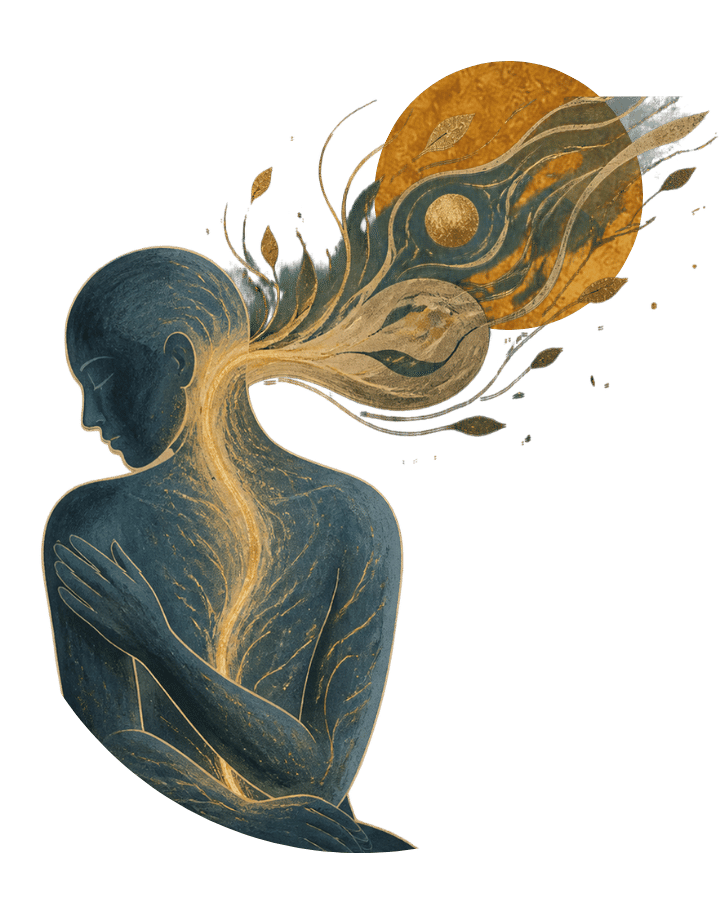
Health is the ability to realize our avowed and unavowed dreams.
—Moshe Feldenkrais
My Own Unlived Dreams
I have an unlived dream of my own. Since I was about nineteen, I’ve dreamed of land I get to steward and be in relationship with. A home, a few places for guests to stay, a small movement studio, and small retreats. More recently, a place where my parents can spend time with us as they age.
That dream is over thirty years old. And after turning 50, I realized that if I’m going to live it, I need to do it now. At the same time, I want to move toward it in a way that honors this season of life. No forcing. Simply taking what feels like aligned action and allowing it to unfold.
How Do You Find a Dream You’ve Forgotten?
You find a forgotten dream by noticing what still tugs at you. Dreams often come back sideways or sneak their way into our thoughts. Sometimes it’s a thread of curiosity we start to pull at, other times it’s a dream that visits us in the night. And sometimes, it’s the nearly invisible voice that starts to speak up but is gone before we can register it.
Here are a few places you can start to create space for those dreams to resurface:
Notice what makes you lean in. What do you catch yourself scrolling on social media? What ideas keep tugging at you? Where do you linger?
Look back. Old journals, letters or photos can all hold dreams you’ve stopped seeing. That’s exactly how I found mine.
Pay attention to your night dreams. They aren’t a crystal ball. But sometimes they show us what we’re longing for before we can name it.
Ask yourself one question: If I don’t do this, will I regret it? Then notice how your body responds or what lights up in your emotions.
So here’s my invitation for this week. Let one forgotten dream come back into the room. Give it a seat at the table. You don’t have to do anything with it yet. Just let it sit there and maybe strike up a conversation with it.
Key Takeaways: Awakening to Your Dreams
Forgotten dreams can be growing beneath the surface. A desire you’ve stopped thinking about may still be shaping your choices and your life.
Many women haven’t lost their dreams. They’ve tucked them away. Busy years, other people’s needs and “not the right time” can push our dreams aside or keep us from dreaming at all.
Unlived dreams matter. Research from Cornell University found that people’s most lasting regrets often came from hopes and aspirations they never pursued.
You don’t have to force a dream to life. Noticing what tugs at you, looking back, and tuning in to your night dreams are simple ways to reconnect.
Frequently Asked Questions About Forgotten Dreams
What does it mean when a forgotten dream comes true?
It can mean a desire was alive in you before you consciously recognized it. Whether the dream was a night dream or a long-held hope, it may have been shaping your attention and choices beneath the surface. Many people experience this as a sense of rightness, or a glimpse of what wants to emerge.
Is it too late to pursue a dream in midlife?
For most dreams, no. Midlife often brings more self-knowledge, clearer priorities, and a stronger sense of what matters. The invitation is to move toward your dreams in a way that fits this season of life. Honor your energy, your relationships, and your values.
How do I reconnect with dreams I let go of?
Start by noticing what still tugs at you: places, activities, or ideas you keep returning to. Old journals and photos can help, and so can paying attention to your night dreams. Then ask whether you’d regret not trying, and notice what you feel.
What are unavowed dreams?
Unavowed dreams are the hopes and desires we haven’t consciously claimed, sometimes we’re not even aware of them. Moshe Feldenkrais, founder of the Feldenkrais Method, spoke about living our unavowed dreams as part of being truly healthy. In my work, I see these dreams surface when women slow down and quiet the biological noise.
________
Originally published: September 2025
Last updated: November 2026
Ethos: Our Dreams Evolve Us